 |
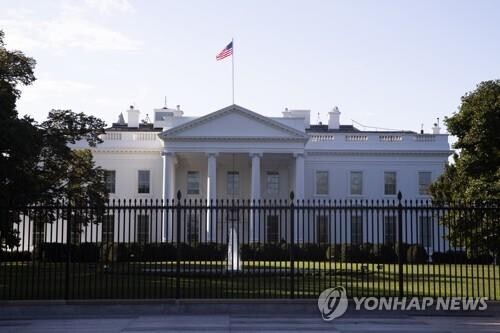
White House (Photo: Yonhap News Agency) |
[Alpha Biz= Paul Lee] Tensions near the White House have reached a peak in recent weeks.
Each time Donald Trump reiterates a deadline for a potential “devastation operation” targeting Iran’s power plants and key facilities, global attention turns squarely to Washington. Yet a peculiar pattern has emerged: what began as a 48-hour deadline has been repeatedly extended—to five days, then ten, and again by “just one more day.”
The international community is left wondering: is this patience in pursuit of peace, or a calculated display of fear?
On the surface, the U.S. and Iran appear engaged in negotiations framed around a “phase one ceasefire, phase two end-of-war” roadmap. In reality, however, the gap between the two sides remains vast. Washington is demanding Iran’s denuclearization and the immediate reopening of the Strait of Hormuz, backed by a list of roughly 15 stringent conditions. Tehran, in contrast, insists it cannot relinquish control over the strategically vital waterway without firm guarantees of a permanent end to hostilities and sanctions relief.
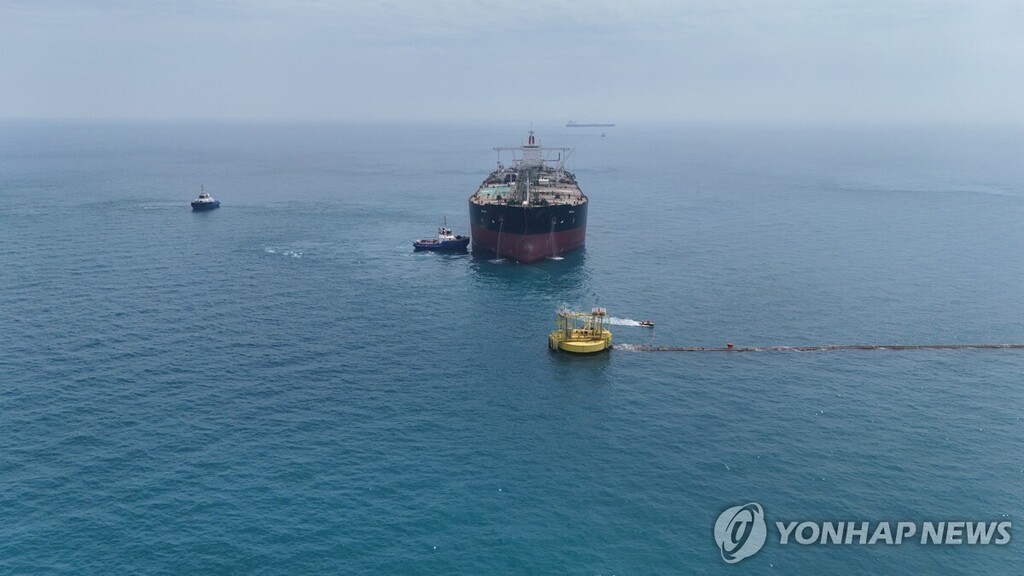 |
Oil Tanker (Photo: Yonhap News Agency) |
At the heart of the standoff lies the value of the Strait of Hormuz. Estimated annual transit revenues of up to KRW 150 trillion represent more than economic gain for Iran—they are a critical lifeline under sanctions and a powerful bargaining chip to bring the United States to the negotiating table. Tehran’s insistence that it will not “forget hostile actions” reflects a determination not to squander this leverage through a premature deal.
Veteran strategists in Washington interpret the repeated deadline extensions as a form of “psychological pressure.” Rather than immediately resorting to full-scale military action, the administration appears to be sustaining a constant sense of imminent threat—an approach aimed at destabilizing Iran internally and extracting concessions under duress.
President Trump has reinforced this pressure with stark rhetoric, warning that Iran could “live in hell,” while simultaneously dispatching envoys to probe Tehran’s responses.
The longer this stalemate continues, however, the greater the risk of unintended escalation. With regional dynamics—such as Israel’s strikes in Lebanon—intertwined with broader geopolitical interests, the Middle East is drifting into an increasingly unpredictable fog.
Ultimately, negotiations hinge on managing deep mutual distrust. The U.S. demands action first; Iran demands guarantees first. As both sides hesitate, questioning each other’s intentions, the machinery of diplomacy churns without progress—and the clock on Middle East peace remains frozen.
How many more “48-hour” cycles must pass before this high-stakes gamble ends is a question the world continues to watch with bated breath.
AlphaBIZ Paul Lee(hoondork1977@alphabiz.co.kr)